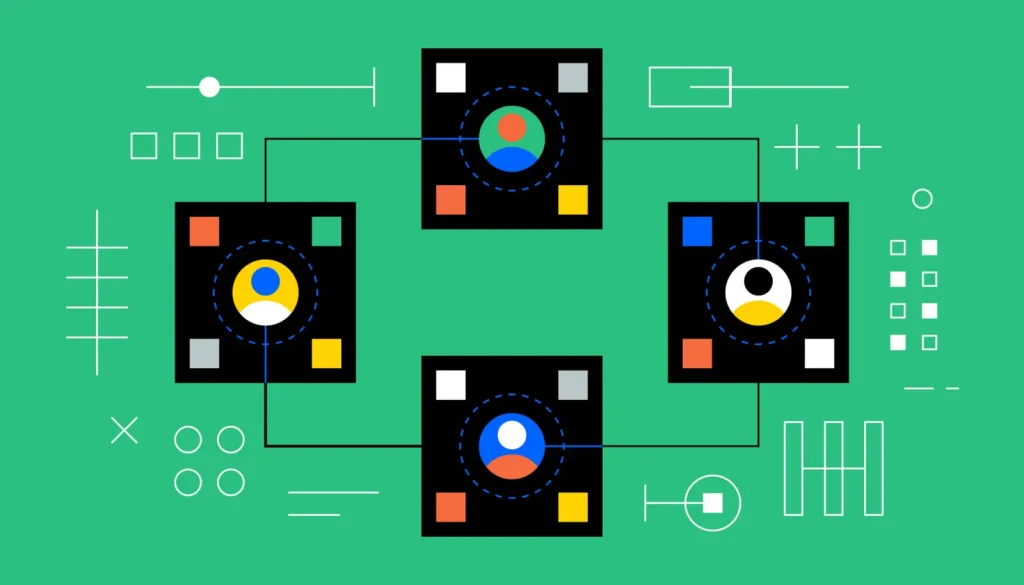

A Decentralized Autonomous Organization (DAO) is a community-run entity with no central leadership, governed instead by rules encoded in smart contracts and decisions made by token-holder votes. Instead of a board of directors making decisions behind closed doors, a DAO’s treasury, proposals, and voting records are typically visible on-chain for anyone to audit.
Key Takeaways
- DAOs replace traditional corporate hierarchy with rules enforced by smart contracts and decisions made through token-holder voting.
- Membership and voting power in most DAOs is tied to holding the project’s governance token.
- DAO treasuries and voting history are typically transparent and on-chain, auditable by anyone.
- DAOs are used to govern DeFi protocols, manage investment collectives, coordinate open-source development, and more.
- Because DAOs rely on code, a bug or exploit in the smart contracts can be very costly — DAO security is a genuinely hard, high-stakes engineering problem.
Our Take
The pitch for DAOs is compelling in theory — remove the principal-agent problem of a traditional company where management’s interests can diverge from shareholders’, and replace it with rules the community can see and vote on directly. In practice, DAO governance runs into its own, very human problems: voter turnout is often low, token-weighted voting can concentrate real power in a handful of large holders, and complex proposals are genuinely hard for a dispersed, part-time electorate to evaluate carefully.
The DAOs that have worked best tend to have narrow, well-defined scopes (managing a specific protocol’s parameters, for instance) rather than trying to replicate a full corporate structure through pure on-chain governance. That’s a useful signal when evaluating any DAO: the more concrete and bounded its decisions are, the more realistic it is that token-holder voting can actually govern it well.
FAQs
Who controls a DAO?
In principle, no single party controls a DAO — decisions are made by token holders voting on proposals, according to rules set in the DAO’s smart contracts. In practice, large token holders often have outsized influence.
What happens if a DAO’s smart contract has a bug?
Since DAO rules and treasuries are enforced by code, a bug or exploit can result in real financial losses, which is why smart contract audits are critical for any DAO managing significant funds.
📎 Source: Coinbase Learn — What are Decentralized Autonomous Organizations (DAO)?