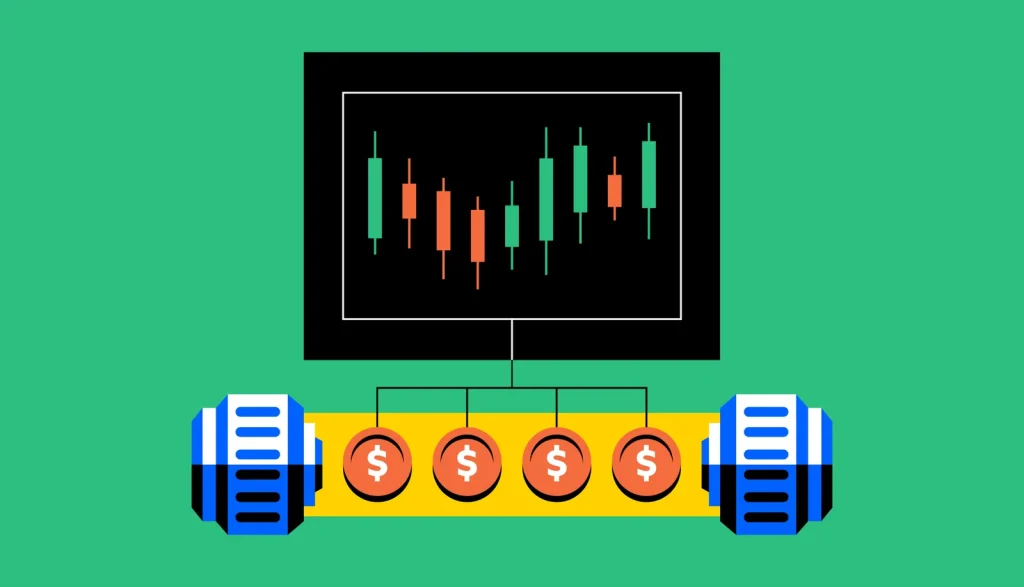

An exchange-traded fund (ETF) is a fund that holds a basket of assets — stocks, bonds, commodities, or, increasingly, crypto — and trades on an exchange just like an individual stock. ETFs let investors get diversified or targeted exposure to an asset or market through a single, easily tradable share, without having to buy each underlying asset individually.
Key Takeaways
- ETFs trade on stock exchanges throughout the day, unlike traditional mutual funds, which only price once per day after markets close.
- An ETF can track a single asset (like gold) or a broad basket (like the S&P 500), giving instant diversification through one purchase.
- Crypto ETFs let investors gain price exposure to cryptocurrencies like Bitcoin through a traditional brokerage account, without directly holding or self-custodying the underlying asset.
- Because you don’t hold the underlying asset directly with an ETF, you also don’t have direct control over it — for crypto ETFs, that means no private keys and no ability to use the coins on-chain (for staking, DeFi, etc.).
- ETFs charge a management fee (‘expense ratio’), which is worth comparing across similar funds since it directly reduces long-term returns.
Crypto ETF vs. Holding Crypto Directly
| Crypto ETF | Holding Crypto Directly | |
|---|---|---|
| Custody | Managed by the fund | Self-custody or exchange account |
| Access | Traditional brokerage account | Crypto exchange or wallet |
| On-chain use (staking, DeFi) | Not possible | Possible |
| Fees | Ongoing expense ratio | Typically one-time trading fees |
Our Take
Crypto ETFs solve a specific, real problem: they let investors who already have a brokerage account and are comfortable with traditional market infrastructure gain price exposure to Bitcoin or other crypto assets without setting up a crypto exchange account, managing private keys, or navigating self-custody. That accessibility is a meaningful reason crypto ETFs have attracted significant capital from investors who were previously unwilling or unable to buy crypto directly.
What an ETF doesn’t give you is any of the properties that make crypto interesting beyond price exposure — you can’t use ETF shares to pay for something peer-to-peer, stake them for yield, or interact with DeFi protocols. For investors purely interested in price exposure as part of a diversified portfolio, that trade-off is often a reasonable one; for anyone interested in crypto’s functional use cases, it isn’t a substitute for actually holding the asset.
FAQs
Can I use crypto held in an ETF for staking or DeFi?
No. An ETF gives you price exposure to the underlying asset through fund shares, but you don’t hold the actual crypto, so you can’t use it on-chain for staking, DeFi, or direct peer-to-peer transactions.
Are crypto ETF fees different from buying crypto directly?
Yes. ETFs typically charge an ongoing annual expense ratio that reduces returns over time, whereas buying crypto directly usually involves a one-time trading fee with no recurring management cost.
📎 Source: Coinbase Learn — What is an ETF?